


By Dr. Karen Shaw Becker - https://www.barkandwhiskers.com/2023-10-12-can-you-feed-pomegranates-to-your-pet/
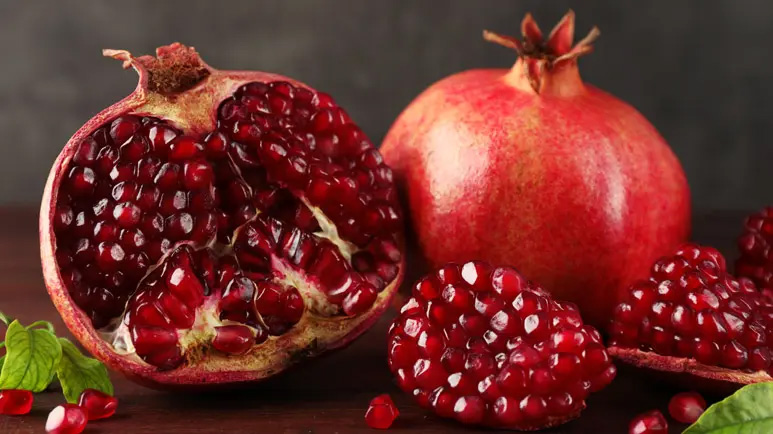
The bright red arils can be added to your pet’s bowl as a food topper or be mixed in pet treats recipes. If you’ve never sliced one open before, here’s how to do it properly to avoid making a mess.
STORY AT-A-GLANCE
- Pomegranate contains ellagitannins, flavones and other bioactive compounds that can support health. In one study, pomegranate extract was found to improve heart health in dogs
- Vitamins and minerals in pomegranate may boost your pet’s health in various ways, such as supporting wound healing, bone reformation and muscle function
- Each tablespoon of pomegranate provides potassium (supporting muscle function), vitamin K (aiding blood clotting and bone health), and vitamin C (boosting immune function)
- When shopping for pomegranates, look for fruits that feel heavy for their size, as this indicates the fruit is at its ripest
- Sustainability concerns in pomegranate production include pesticide use, high irrigation needs, and plastic packaging; choose organic, sustainably grown varieties when possible
Editor’s Note: This article is a reprint. It was originally published October 12, 2023.
Pomegranate (Punica granatum) is one of the oldest fruits known to mankind. It has been revered throughout many cultures. Ancient Greeks associated the fruit with Persephone, the goddess of spring, and believed it represented life, regeneration and marriage. Meanwhile, Christians view the pomegranate as a symbol of fertility.1
In addition to the cultural significance of pomegranate, another reason for its lasting popularity is its nutritional content. A growing amount of research shows that pomegranate is rich in various vitamins, minerals and other bioactive compounds that may support your health.
Interestingly, pomegranate may benefit your pet’s health, too. This article will show you how this fruit may benefit your pet, as well as how to select and prepare it for feeding.
Powerful Bioactive Compounds Abound in Pomegranates
“Pomegranate may be one of the most nutritionally diverse fruits you can offer to your pet. Its collection of bioactive compounds, vitamins and minerals contribute to optimal health. From promoting cardiovascular health to brain health, you’ll be doing your pet’s health a great service by making it an addition to their diet.”
Nutritionally speaking, there’s a good reason why pomegranates have stood the test of time. Research has shown that this fruit is rich in bioactive compounds that support health. Prominent examples include “ellagitannins, hydroxycinnamic acids, hydroxybenzoic acids, flavones, flavonol-3-ols, anthocyanidin and conjugated and nonconjugated fatty acids, phytosterols, vitamins and minerals.”3
How can these nutrients specifically benefit your pet? In a study published in the International Journal of Applied Research in Veterinary Medicine, dogs fed pomegranate extract had better heart health thanks to its antioxidant and cytoprotective properties, particularly in endothelial function.4
Ellagitannins are another notable bioactive compound in pomegranate. They’re metabolized into urolithin A by gut flora, which has anticancer potential.5 Mice studies also showed that urolithin A helped improve cognition based on tested populations, as well as induced autophagy and increased amyloid-beta clearance in neuronal cell lines.6 Another mice study found that urolithin A may help promote healthy weight by enhancing adipose tissue thermogenesis.7
Other Nutrients Contribute to the Power of Pomegranate
Pomegranate has vitamins and minerals that make it an enticing, nutritious snack. A single tablespoon can provide 12.8 milligrams of potassium, 0.89 micrograms of vitamin K and 0.55 milligrams of vitamin C.8
Potassium may support muscle function, as it helps with contraction and relaxation. Moreover, potassium may also help with nerve function.9 As for vitamin K, it’s known to play a role in blood coagulation, which may help with blood clotting.10 This vitamin is also known for supporting bone reabsorption11 and maintaining proper bone density.12
Vitamin C is also essential for pets, just like humans. Although dogs can synthesize vitamin C in their body, getting supplementary amounts of it from their diet can be good for their health. This vitamin helps promote proper immune function and serves as a cofactor for numerous enzymes.13 Vitamin C also helps promote skin health and wound healing.14
Preparing Pomegranate and Offering It to Your Pet
Choosing the best pomegranate from your local farmers market or grocery store is an easy task. Here are three things you should look for:16
- Shape — Perfectly ripe pomegranates are not round. Instead, look for flattened, angular sides.
- Color — Pomegranate skin may range from light to dark red. Despite the differences, you’ll know they’re ripe due to the smoothness and firmness of the skin.
- Weight — Pick up the pomegranate and get a feel for its weight. It should be heavy relative to its size, which means that the seeds are now full and juicy.
If you’ve never opened pomegranates before, doing it the wrong way can result in a mess and possibly waste good fruit. Here’s an easy technique that will help you maximize all the goodness inside:17
- Cut a square into the blossom end of the fruit. It should be just deep enough to peel away the shell.
- Remove the square you just sliced, revealing the pomegranate seeds inside.
- Run the blade down the outer shell of the fruit, following the natural membranes that separate each section.
- Use your fingers to separate each section of the pomegranate.
After you’ve sliced the pomegranate, the next part is simply feeding the seeds, sometimes called “jewels” or arils, to your pet. Some dogs like the tart flavor and crunch of pomegranate seeds, and yours might enjoy it as well. Mix a teaspoon for every 10 pounds of your pet’s bodyweight with their homemade meal.
If you have a kitty and they’re showing an interest in pomegranate, it’s also safe to let them try it. Pomegranate may be offered as a snack or it can be used as an ingredient in a homemade treat. Just be sure to follow the 10% guideline, wherein treats should only comprise less than 10% of your pet’s daily food intake.
Sustainability of the Pomegranate Industry
According to a report, the sustainability of the pomegranate industry isn’t positive. Issues include pesticide use, high irrigation requirements and low land yield. Another hurdle is the use of plastic packaging, which may contribute to pollution.19 There’s also the chance that the pomegranate you’re buying may be sprayed with insecticides, as it’s one of the recommended methods to protect the harvest.20
If possible, look for organic, spray-free pomegranate grown using sustainable methods at your local farmers market. Be sure to ask your local producer how the pomegranate is grown so you know what goes into your and your pet’s body. If there are no organic varieties available, that’s OK. Just make sure you wash the pomegranates thoroughly before feeding it to your family, including your pets.
Sources and References
- 1 BMJ. 2000 Nov 4; 321(7269): 1153–1154, Sacred Meanings
- 2 Madera Chamber, Pomegranate History
- 3 Bioactive Molecules in Food pp 1253–1279
- 4 Intern J Appl Res Vet Med, Vol 10, No. 2, 2012, Abstract (Archived)
- 5 In: Herbal Medicine: Biomolecular and Clinical Aspects. 2nd edition. Boca Raton (FL): CRC Press/Taylor & Francis; 2011. Chapter 10., Excerpt
- 6 Geroscience. 2023 Apr;45(2):1095-1113, Abstract
- 7 PLoS Biol 18(3): e3000688, Abstract
- 8 USDA, “Pomegranates, Raw”
- 9 VCA, Hypokalemia (Low Potassium Levels in Dogs)
- 10 Wag, August 9, 2023
- 11 J Osteoporos. 2019; 2019: 2069176, Abstract
- 12 Total Health Magazine, Vitamin K for Pets (Archived)
- 13 Free Radic Biol Med. 2011 Sep 1; 51(5): 1000–1013, Vitamin C
- 14 Int Wound J. 2015 Aug 20;13(4):572–584, Abstract
- 15 Kew Royal Botanic Gardens, December 18, 2019 (Archived)
- 16 AllRecipes, November 3, 2023
- 17 Food and Wine, November 21, 2022
- 18 UNECE, March 1, 2022
- 19 Impactful Ninja, The Environmental Impact of Pomegranates: From Farm to Table
- 20 National Horticulture Board India, Pomegranates – Pests
